Showing posts with label Moldova. Show all posts

Sep 10, 2012

From the European ‘Party of Discontents’ to the Authoritarian ‘Axis of Resistance' to the West?

By Irina Severin | 20.08.12

Will Merkel's Visit to Moldova Make a Difference?


Why Angela Merkel, the most influential European politician, in the midst of the EU financial crisis decided to visit Moldova - Europe's poorest and otherwise insignificant country? Why bother?

A glance at the map shows that Moldova including its breakaway region Transnistria (self-proclaimed in 1990-s with the Russian Army support) is sandwiched between two countries, problematic for the EU:  Ukraine with the "Tymoshenko case" and Romania with the 'Basescu case'. Both countries Romania as a member of the EU and Ukraine,   proclaiming the European aspirations demonstrate clear potential for sliding into authoritarianism. 

In both cases, there are indications of Russian involvement in domestic political processes. In the Romanian case, Russia was traced as encouraging the Ponta-Antonescu 'coup' against Basescu. In Ukraine, Russia's growing meddling limits Ukrainian potential for democratization.

The economic pressure is another instrument of influence. In both cases,  gas prices being political are used for control of the political and economic situation in the countries.

Transnistria, existing mostly for justification of the Russian military presence in the region, is a direct threat to security in the Europe, not a "stabilizing factor" as Russia pretends.  Russia involvement wouldn't be a threat if Moscow were moving to rapprochement with the EU modernizing its political and economic system. Germany is interested in cooperation with Russia, but both the EU and Germany need to see that Russia is open for the European values as a precondition for closer interaction and for being guaranty for stability.
In 2009 Angela Merkel offered closer cooperation to Medvedev in exchange to Russia constructive role in the Transnistrian frozen conflict settlement. Russia didn't advance in this direction preferring to impose its will maintaining its military presence on the border with the EU. Russia is quite pessimistic about the EU future considering it a temporary experiment and recalling that about 50 years ago European countries were each other’s worst enemy.
Moscow thinks that the EU dissolution would rise Russia to a great power status. Though, Russia's plans are much more ambitious. Russia considers its  Eurasian Union an alternative to the EU and doesn't limit it with the former USSR borders as some used to think. 

As Fyodor Lukyanov mentions in his article Uncertain World: Does Europe Have Any Alternative? Moscow doesn't exclude that it can relapse in what it names 'big Balkan game’ and even ‘big Orthodox game’ (including Greece and Serbia, for instance)."
From the European 'Party of Discontents'…
Meantime Russia tries to get control over the EU's decision-making without abiding by the European principles, but converting the EU countries to its own political 'matrix'. Technically this is achievable by encouraging the EU countries' politicians to break the EU political standards and oppose to the EU requirements. 

Now this is happening in Romania with Ponta government.  He came to power by organizing protests against President Basescu accusing him in complying with the tight the EU and IMF requirements.  Ponta's actions are tempered for now by coming parliamentary elections. Romanians are staunchly pro-European, and any anti-European rhetoric would obstruct their chances to win elections. 

Earlier Greek Syriza incited long-term protests against the EU and IMF, what put on the brink of collapse not only Greece but the EU and Eurozone as well. 

Opposing to the EU and the IMF from left or right by default puts any country into the Russian sphere of influence and at Russia's mercy.  Lukyanov names this opposition to the EU "the growing "party of discontents": "Both ideological extremes are brought together by the new rhetoric calling on the government to defend the public against the social ills of globalization". Further, he explains:
The difference between the ‘party of recovery’(consisting of Conservatives, Christian Democrats, Liberals and Social Democrats) versus the 'party of discontents' lies in their ability to run the state. The former has a clear idea of what should be done and how, but finds it increasingly difficult to garner public support, while its opponent can channel public sentiment but lacks a strategy of its own. The discontents are chanting slogans without assuming any responsibility. 
Ideological developments are more complicated. One EU country, Hungary, is already essentially turning its back on European valuesIt is increasingly leaning towards a more conservative and nationalist policy. 
On another side of Moldova - in Ukraine Russia recently managed to considerably advance its interests in exchange for a promise of lower gas prices. The "Language law" offers status of the regional language to the Russian language making the Ukrainian language redundant in more than half of Ukraine. 

Now Russian propagandists promote as the next step the idea of partition of Ukraine on the Ukrainian-speaking West and predominantly Russian-speaking rest of the country, where the Ukrainian language will be excluded, and the Ukrainian speakers will become the unprotected minority. 


The "Language law" has radicalized and polarized political situation in Ukraine,  making the country unstable before the elections. Not to mention here the incarceration of the opposition leaders, what is the anathema for the EU, but an apparent gain for Russia.
On this background,  Moldova despite all odds following democratic principles and adopting European values is looking like a rare case of success, which can become a showcase for others. The country doesn't require massive investments and is genuinely European. 
At the same time, lack of 'clear European prospective' for Moldova makes it a subject of the Russian pressure. One of the instruments is artificially created fringe movements: pro-Russian, invoking reunification with Russia and 'anti-Russian', promoting reunification with Romania. 

Both extremes exploit and boost nationalistic moods and raise the grade of polarization of the society. Recent March, organized by a fringe group supporting Unification with Romania, led to staged clashes with the "Patriots of Moldova", another fringe group, promoting the idea of unification with Russia. Naturally, such performances don't encourage the Transnistrian conflict resolution. Quite the opposite - they offer a justification for the existence of Russia's  military outpost on the Dniester. 
…To the Authoritarian 'Axis of Resistance' to the West
Merkel's encouragement of Moldova's European aspirations can strengthen Moldova as a stability factor in the region as well as a positive example for the neighboring countries. Otherwise, Moldova as small as it is can trigger a massive destabilization,  which can reach as far as the Balkans and Greece. Moldova’s territorial integrity and sovereignty is a key for the European security and stability.
If not supported now Moldova together with the EU's "party of discontents" one day can become a part of the authoritarian 'Axis of resistance' to the West, which Putin is working hard to create after his return to the presidency. 

The Authoritarian Axis became apparent due to the Syria case. Apparently, it includes Russia, Syria, China, Iran, North Korea, Venezuela. The situation starts to resemble the "Cold War" bi-polar world order when two sides were fighting for promoting their political models to expand their influence. 

Putin managed to replace the communism with the ideology of the Resistance to the West but has nothing to offer as an alternative political or economic model. Exactly as the European  "party of discontent", ‘ "detected"  by Lukyanov,  Moscow knows how to "channel public sentiment" and "to sow the seeds of discontent’ around the world, but doesn't know what to do next. Being underdeveloped and ineffective Russia could only lead the world to the chaos. 
For many years the reply of the West to Russia's growing assertion abroad was 'we don't fight with Russia'. But the problem is that Russia is fighting the West. And the West should at least acknowledge this. And if not fighting back at least to secure democratic values and principles in the world with some meaningful steps. Supporting Moldova today Merkel invests in stability and security in the Europe, what can be not achievable tomorrow.
The next day after Angela Merkel's announcement about her coming to Moldova Prime Minister Vlad Filat has got an invitation from  Moscow to meet Vladimir Putin after Merkel's visit. Will Moldova become the next target of promises of lower gas prices in exchange for the anti-Western  'discontent moves'?

Jun 14, 2010

Moldova: What a Difference a Year Makes - New Europe

Moldova: What a Difference a Year Makes - New Europe

WASHINGTON - Exactly a year ago, Moldova was a mess. Two days after parliamentary elections, on April 7, 2009, initial results showed the Communist Party with a lead big enough to maintain control over the legislature and government, if not the presidency. In a country where freedom of expression had become an ideal, not a reality, and following an electoral campaign tightly controlled by the governing Communists, frustrations boiled over among some protestors, especially youth who took to the streets and ransacked the parliament and presidential buildings. Three people died in the violence, and others were subsequently subjected to brutal treatment and abuse by police.

Dec 27, 2009

AUDIO: Apropiere fără precedent UE - Republica Moldova | Moldova | Deutsche Welle | 22.12.2009

AUDIO: Apropiere fără precedent UE - Republica Moldova | Moldova | Deutsche Welle | 22.12.2009

Moldova | 22.12.2009

Premierul Republicii Moldova, Vlad Filat

Premierul moldovean, Vlad Filat, a explicat într-un interviu în exclusivitate pentru Deutsche Welle strategia de apropiere a ţării sale de blocul comunitar şi priorităţile noii administraţii de la Chişinău.

Republica Moldova va demara la începutul lui 2010 discuţiile pe marginea semnării unui Acord de Asociere cu Uniunea Europeană. Decizia a fost luată miercuri 21 decembrie la Bruxelles în cadrul reuniunii Consiliului de Cooperare Republica Moldova - Uniunea Europeană.
Ascultaţi interviul cu Vlad Filat accesând fişierul audio de mai jos.
Autor: Susanne Henn, DW Bruxelles
Redactor: Robert Schwartz

Dec 19, 2009

Communists in Moldova sabotage presidential vote

Communists in Moldova sabotage presidential vote - RT

Published 07 December, 2009, 15:44

Edited 07 December, 2009, 23:11

Moldova’s parliament has failed to elect a president after the opposition refused to support the sole presidential candidate Marian Lupu. Thus, the political crisis in the eastern European country is going to continue.


On Monday, prior to the scheduled vote, the nominee of the ruling Alliance for European Integration – which unites the Democratic Party, the Liberal Party, the Liberal Democrats and Our Moldova party – presented his program to the parliament.

Lupu vowed to “open a new page” in the settlement of the Trans-Dniester conflict and to resume the “5+2” (Moldova, Trans-Dniester, Ukraine, Russia, the OSCE and monitors from the US and the EU) talks on the breakaway region.

Read more

Trans-Dniester has been seeking independence from Moldova since the final days of the Soviet Union. The region has a predominantly Russian and Ukrainian population, with Moldavians a considerable minority. In late 1980, the local authorities in Moldova sought closer ties with Romania, and Trans-Dniester's population – which feared discrimination – launched a campaign of civil disobedience.

The tension erupted into armed conflict, which was stopped by Russian peacekeepers. The region's peace process is sponsored by Ukraine, Russia, the European Union, the United States and the OSCE. So far Trans-Dniester is not recognised as an independent state by any major country.

However, despite Lupu’s promises to address the issue of the disputed region in Eastern Europe, the opposition – the Communist party – refused to vote for the candidate and decided not to take part in the election.

In a declaration read out by the Communists’ leader, Maria Postoico, it was explained that the decision is a sign of protest against the alliance’s policies. In addition, the former comrades apparently couldn’t forgive Lupu – a former communist – for his “betrayal”.

Earlier, the opposition leader and former Moldovan president Vladimir Voronin said that communists wouldn’t vote for Lupu because they want the parliament to be dissolved and snap elections held.

The state leader in Moldova is elected by the country’s parliament. 61 votes are required for the president to be elected. The coalition has 53 mandates and the communists – 48, therefore without the opposition support the ruling alliance cannot choose the head of the state.

"I believe that a way out of the political collapse in the country could be brought about by a referendum on constitutional changes," Marian Lupu told RIA Novosti on Monday.

December 7 vote has become the third time this year that the former Soviet sate was trying to elect a president.

After the disputed parliamentary election in April this year followed by violent protests in the capital Chisinau, the Communists' candidate twice failed to get the required votes. As a result, snap elections were held in July and brought a liberal-democratic coalition to power.

Now, after the presidential election attempt has failed one again, snap elections will be held in 2010, since according to Moldovan law, the parliament cannot be dissolved more than once a year.

Dec 17, 2009

Proiect politic de centru stînga lansat de un businessman

Proiect politic de centru stîng lansat de un businessman


Nicolae Ciornii
16.12.2009
Vice-preşedintele companiei petroliere Lukoil Nicolae Ciornîi: "Concentrarea mea va fi cel mai mult pe baza economică"

După ce 4 deputaţi au declarat zilele trecute că părăsesc fracţiunea comuniştilor şi au intenţia să creeze ceea ce ei numesc un proiect, pe eşichierul politic se prefigurează un nou partid de centru-stînga de model social, lansat de vicepreşedintele companiei petroliere Lukoil, Nicolae Ciornîi. Există vreo înţelegere între Ciornîi şi cei 4 „foşti comunişti”?


Nicolae Ciornîi susţine că se lansează în politică pe cont propriu şi că nu a discutat despre noul partid pe care îl zămisleşte nici cu Vladimir Ţurcan, nici cu Victor Stepaniuc şi nici cu Dumitru Braghiş. Totuşi Ciornîi va accepta să se întîlnească cu aceste persoane dacă vor avea tangenţe de natură social-democrată.

Nicolae Ciornîi: "Concentrarea mea va fi cel mai mult pe baza economică, noi trebuie să aducem oameni de afaceri care o să investească bani în domeniul agriculturii, în sectorul de turism, industria uşoară, industria automată, electronică; sînt idei foarte multe cum să hotărîm dezvoltarea infrastructurii fiindcă infrastructura din ţara noastră arată foarte prost şi nu atrage pe nimeni".

Fiind conştient de faptul că pe segmentul de stînga al eşichierului politic moldovenesc e concurenţă strînsă, Nicolae Ciornîi a declarat că este gata să facă coaliţii sau chiar să fuzioneze cu alte formaţiuni de aceeaşi orientare, dar în niciun caz cu liberalii sau comuniştii. I-am întrebat pe Vladimir Ţurcan şi Victor Stepaniuc dacă îi interesează proiectul lui Ciornîi şi dacă acesta le poate fi un concurent.

Vladimir Ţurcan: "Eu vă spun sincer, nu m-am prea gîndit despre aceea, concurent-neconcurent, principalul că a apărut încă o persoană care a declarat că are grijă de această ţară şi este patriot, dar mai departe vedem. Dacă dlui o să facă cunoştinţă cu proiectul pe care îl promovăm şi dacă o să aibă interes, noi o să fim disponibili să discutăm cu dumnealui".

Victor Stepaniuc deocamdată nu are o părere foarte clară în această privinţă: "Eu îl cunosc foarte puţin pe dl Ciornîi şi în cazul de faţă nu pot să comentez prea mult".

Analistul Nicolae Negru afirmă că există o „înghesuială” pe eşichier, dar s-ar putea întîmpla ca proiectele lui Ciornîi şi Ţurcan să coincidă la un moment dat. Acestea demonstrează că unele forţe politice, din exterior sau interior, observă o slăbiciune a partidului comuniştilor şi încearcă să profite de ea, susţine Nicolae Negru: "Mai degrabă că dl Ciornîi vine din Rusia şi s-ar putea să fie un proiect al Rusiei care a decis acuma sau probabil a decis că nu mai poate miza pe partidul comuniştilor, că nu mai poate ţine ouăle într-un singur coş şi trebuie să le pună în coşuri diferite. Şi iată că se anunţă proiectul lui Ţurcan, proiectul lui Ciornîi".

Faptul că un om bogat, cum este Nicolae Ciornîi, chiar prea bogat pentru condiţiile Moldovei, după cum afirmă Nicolae Negru, vrea să creeze un partid de stînga, de model social, pare cam ciudat. Acesta trădează unele reflexe socialiste, sovietice, dar, cu toate acestea, proiectul ar putea avea succes, fiindcă businessmanul Ciornîi a reuşit în afacerile sale, conchide analistul.

Dec 16, 2009

Chess, Poker, And Kickboxing In Moldovan Politics - Radio Free Europe / Radio Liberty © 2009

Chess, Poker, And Kickboxing In Moldovan Politics - Radio Free Europe / Radio Liberty © 2009:
December 15, 2009
By Louis O'Neill
After hearing that his obituary has been published in "The New York Journal," Mark Twain famously quipped, "The reports of my death are greatly exaggerated."

The same could be said of the death knell sounded for Moldova's Communist Party (PCRM) by some excited analysts after its decision to boycott last week's vote in parliament for a new president. Although the theory of a disoriented PCRM dissolving internally and melting away has a superficial appeal and some supporting evidence, there is a far more complex game playing out in Chisinau, combining elements of three-dimensional chess, no-limits poker, and bare-knuckled kickboxing.

For sure, Communist leader and former President Vladimir Voronin has had to make a difficult adjustment: He now must play "black" pieces instead of "white," reacting to political events rather than driving them. And it is likely that his general animosity toward the Alliance for European Integration (AIE) and particular dislike of defector Marian Lupu are at the forefront of his thinking.

But at the end of the day the Communists' entirely rational goal is to hang onto power by remaining indispensable to the Moldovan political process. If an analysis of the PCRM's behavior is divorced from projections of emotionality or wishful thinking, it can be evaluated as a hard-headed but highly risky strategy. more

Voronin: After the departure of four members, the PCRM will be stronger!

Google Translate: "Voronin: After the departure of four members, the PCRM will be stronger! (origonal)
Voronin: After the departure of four members, the PCRM will be stronger!

Foto: imageshack.us Photo: imageshack.us

( UPDATE: 12:23 ) Vladimir Voronin, preşedinte PCRM: “Vom discuta despre problemele din partid, despre excluderea din Comitetul Central al lui Stepaniuc. (UPDATE: 12:23) Vladimir Voronin, president of PCRM: 'We will discuss problems in the party, about the exclusion of the Central Committee's Stepaniuc. Plecarea celor patru deputaţi din fracţiunea PCRM nu va afecta partidul, dimpotrivă, PCRM va fi mai puternic.” The departure of four members of the Communist Party faction will not affect the party, on the contrary, the PCRM will be stronger. '

Conducerea Partidului Comuniştilor din Republica Moldova se reuneşte, la ora 12.00, într-o şedinţă a Plenarei. Party leadership of Moldova shall meet, at 12.00, in a meeting of the Plenary. Deputatul comunist Grigore Petrenco spune că liderii PCRM vor analiza situaţia din partid. Communist Deputy Gregory said Petrenco Communist Party leaders will assess the situation in the party.

Amintim că ieri, 15 decembrie, patru deputaţi au părăsit fracţiunea PCRM, comuniştii rămând astfel cu 44 de parlamentari. Recall that yesterday, December 15, four members left the Communist Party faction, the Communists rămând so with 44 MPs."

Voronin: După plecarea celor patru deputaţi, PCRM va fi mai puternic! | UNIMEDIA - portalul de ştiri nr. 1 din Moldova

Voronin: După plecarea celor patru deputaţi, PCRM va fi mai puternic! | UNIMEDIA
 Voronin: După plecarea celor patru deputaţi, PCRM va fi mai puternic!

Foto: imageshack.us

(UPDATE: 12:23) Vladimir Voronin, preşedinte PCRM: “Vom discuta despre problemele din partid, despre excluderea din Comitetul Central al lui Stepaniuc. Plecarea celor patru deputaţi din fracţiunea PCRM nu va afecta partidul, dimpotrivă, PCRM va fi mai puternic.”

Conducerea Partidului Comuniştilor din Republica Moldova se reuneşte, la ora 12.00, într-o şedinţă a Plenarei. Deputatul comunist Grigore Petrenco spune că liderii PCRM vor analiza situaţia din partid.

Amintim că ieri, 15 decembrie, patru deputaţi au părăsit fracţiunea PCRM, comuniştii rămând astfel cu 44 de parlamentari."

Nicolae Ciornii se lanseaza in politica cu un proiect propriu: Partidul Muncii

Nicolae Ciornii se lanseaza in politica cu un proiect propriu: Partidul Muncii
"Miercuri, 16 Decembrie, 2009 / 10:51
Nicolae Ciornii
Foto: vipmagazin.md

Omul de afaceri Nicolae Ciornii se lanseaza in politica de sine statator. Ciornii spune ca a decis sa revin acasa pentru a face ceva bun pentru economia si dezvoltarea tarii si va lansa in curand un proiect politic propriu, de doctrina centru-stanga. Businessman-ul nu exclude ca noua formatiune se va numi Partidul Muncii si se va uni cu alte partide cu aceeasi orientare, dar nici intr-un caz cu Partidul Comunistilor.
'De-a lungul anilor am activat in functii de stat cu caracter economic si imi sunt cunoscute problemele tarii, insa, in opinia mea, putini sunt profesionisti care le pot rezolva, de aceea am fost nevoit sa ma ocup de afaceri. Activand la Lukoil, am derulat proiecte in 25 de tari, am cunoscut numerosi lideri de state, am acumulat o experienta bogata. Acum am decis sa revin acasa. Am fost inteles de presedintele Lukoil', a declarat Ciornii, intr-o conferinta de presa.

Ciornii a spus ca va avea mai multe intalniri cu lideri politici de la Chisinau pentru a decide ce va face mai departe. El nu exclude ca se va intalni si cu liderul PSD, Dumitru Braghis, fostii deputati comunisti Vladimir Stepaniuc si Vladimir Turcan. De asemenea, omul de afaceri spune ca este sustinut de mai multi oameni de afaceri.

'Numai unindu-ne eforturile vom scoate tara din impas, vom demonstra ca Republica Moldova merita sa devina mambra a Uniunii Europene', a spus Ciornii.

Nicolae Ciornii este unul dintre cei mai bogati si influenti oameni de afaceri din Republica Moldova. Este vicepresedinte al gigantului petrolier rus 'Lukoil', a patronat clubul de fotbal 'Zimbru' Chisinau, unde este in prezent presedinte onorific. Detine proprietati in Moldova, Rusia, Romania si Ucraina, averea sa fiind estimata de experti la 300-500 de milioane de dolari.

Ciornii a evitat sa spuna care este averea sa, dar a precizat ca a castigat toti banii prin munca asidua si cinstita 'nu aici, dar peste hotare', lucrand 10 ani in Lukoil."

Dec 14, 2009

Moldova on Automatic Pilot After the Presidential Election Fails Again

Moldova on Automatic Pilot After the Presidential Election Fails Again
Publication: Eurasia Daily Monitor Volume: 6 Issue: 225
December 8, 2009 09:17 PM Age: 6 days
Category: Eurasia Daily Monitor, Vlad’s Corner, Domestic/Social, Moldova
On December 7 Moldova failed in its fifth attempt this year to elect a head of state in parliament. The Communist Party, which governed from 2001 to September 2009 and retains 48 seats in this parliament, blocked the election of Marian Lupu, presidential candidate of the now-governing Alliance for European Integration (AEI) of four parties. Lupu, who leads the Democratic Party within the AEI, received all of the AEI’s 53 votes. Under Moldova’s constitution, however, the president is elected with at least 61 votes in favor in the 101-seat parliament (Moldpres, December 7).

With this failure the parliament also lost its final chance to preserve its constitutional legitimacy. This parliament itself is the product of repeat elections, which were held on July 29, after the parliament that had been elected on April 5 failed to elect a head of state and was consequently dissolved.

Under Moldova’s constitution, the December 7 failure triggers once again the parliament’s dissolution by the head of state and the holding of new parliamentary elections. Moldova, however, lacks a fully legitimate head of state now. Parliamentary Chairman Mihai Ghimpu is serving ex officio as a temporary head of state. He stands to lose both sets of powers if the parliament is dissolved as the constitution requires. Furthermore, under the constitution the parliament may not be dissolved twice within a 12 month period. Thus, the existing parliament can only be dissolved in June or July 2010, with new parliamentary elections to be held by August or September that year, to be followed immediately by a presidential election in the new parliament under the constitution.

Thus, Moldova finds itself deep in the throes of a permanent electoral campaign that started de facto in fall 2008, and which will be two years old by the time the new parliamentary and presidential elections are held. The country will have to keep navigating on automatic pilot until the constitutional and political crises are resolved somehow.

Ghimpu and Prime Minister Vlad Filat –the trend-setters within AEI– propose mutually conflicting ways of changing the constitution and holding new elections. Ghimpu whose nominal Liberal Party is weak and may suffer a setback in new elections, suggests retaining the existing parliament for the entire four-year legislative cycle. Although the constitution does require the parliament’s automatic dissolution after the December 7 failure, the document does not specify a time period by which the head of state must issue the decree for dissolution and new elections. As temporary head of state, Ghimpu proposes holding a referendum by mid-2010 to amend the constitution, so as to elect the head of state with a simple parliamentary majority of 51 out of 101 votes. The parliament could even now decide with that simple majority to call a referendum (Moldpres, Basapres, News-In, December 1-7).

The Liberal Party also favors changing the constitutional name of the language, from Moldovan to Romanian, in line with this party’s irredentist views. Attending Romanian National Day celebrations in Chisinau on December 1, Ghimpu and other Liberal Party leaders made resounding statements defining Moldova as a “country for the Romanians.” Proposals to change the name of the language would be heavily defeated in a referendum, but the Liberal Party and some in the Liberal-Democrat Party would favor changing the name of the language by parliamentary vote.

Filat, whose nominal Liberal-Democrat Party has some potential to become a Moldovan “party of power,” is interested in new parliamentary elections and suggests holding them by fall 2010. Filat is a talented and energetic technician of power as well as transition businessman. Filat’s party is rapidly accumulating “administrative resources,” appointing supporters in the administrative apparatus, and building up relationships with business interest groups. This party would enter elections next year from a position of strength. The smallest among AEI’s four parties, Moldova Noastra, fears falling below the 5 percent threshold in any new elections and is therefore supporting the Ghimpu Liberals’ position to preserve the existing parliament for another four years (Moldpres, Basapres, News-In, December 1-7).

The defeated presidential candidate Lupu leads the AEI’s third-largest party, but his Democratic Party seems set to catch up with Filat’s Liberal-Democrats and overtake them, provided that the playing field remains level. Relatively bereft of administrative resources, the leader’s personal appeal is the Democratic Party’s strongest asset, in a society that follows party leaders rather than parties as such. According to the twice-a-year Public Opinion Barometer survey, released on December 8, Lupu’s Democratic Party would become the AEI’s largest, with 24 parliamentary seats, if new elections were held now. A separate survey also puts the Democratic Party ahead of the other three AEI parties, if elections were held now (News-In, December 3, 8).

Moldova to seek for closer cooperation with Russia | Top Russian news and analysis online | 'RIA Novosti' newswire

Moldova to seek for closer cooperation with Russia | Top Russian news and analysis online | 'RIA Novosti' newswire:

04:1011/12/2009

CHISINAU, December 11 (RIA Novosti) - Moldova will seek to develop cooperation with Russia and ask the Russian authorities to provide it with a loan, the Moldovan vice premier said ahead of his visit to Moscow on Friday.

Valery Lazer, who is also the Moldovan economy minister, will visit the Russian capital for a CIS Economic Council's regular meeting.

'Russia is Moldova's main strategic ally. Our country is highly interested in the closest cooperation with Russia,' Lazer told RIA Novosti on Thursday.
Related News
He said such cooperation would help the two countries to overcome the consequences of the global economic crisis.
Moldovan Prime Minister Vlad Filat has set Moldova's integration into the European Union and overcoming the economic crisis in Europe's poorest nation as the government's top priorities.

Russian Prime Minister Vladimir Putin agreed in June to provide Moldova with the $500 million loan for investment programs requested by the country's former communist president Vladimir Voronin. Negotiations on the issue are underway.

Valery Lazer said he would ask Russia to provide Moldova with the first $150-million tranche as soon as possible, adding the country 'sorely needs' it.

'But we need not just the loan, we need a partnership with Russia,' he said."

Dec 13, 2009

B92 - News - Region - Romanian billionaire to invest in media?

B92 - News - Region - Romanian billionaire to invest in media?
10 December 2009 | 09:47 | Source: Beta
BUCHAREST -- Sorin Ovidiu Vantu, owner of Realitatea-Catavencu Media Group, will launch three TV stations in Serbia, Hungary and Moldova.

This is according to a Romanian news agency Mediafax report.

Vantu announced that he would open three TV stations in Serbia, Hungary and Moldova in 2010, because he no longer believed that the print media were efficient and profitable at the moment.

The Romanian Media Group owner has decided to invest in electronic media – internet, radio and TV, 'which have a future'.

He said that he would continue to support his newspaper Cotidianul in lower circulation but that he would not invest in its further development.

Vantu pointed out that the television he was planning to launch in Serbia would have elements of his TV stations Realitatea and The Money Channel, meaning that the program content would be somewhere between economical and political.

Vantu is described as one of the wealthiest Romanians with an estimated fortune of EUR 1.2bn. He does most of his business abroad.

His media company includes two TV stations, a radio stations, NewsIn news agency, National Institute for Opinion Surveys and Marketing (INSOMAR), a daily and a weekly newspaper and a magazine and the company mainly deals with commercials and real-estate."

Oct 4, 2009

Who Wins If Ireland Rejects The Lisbon Treaty?

Russia behind No camp in Ireland: U.S. credibility is used to bolster the anti-Lisbon vote in Ireland

Declan Ganley hides US flag prior to his interview

The DW video was widely posted on blogs and viewed on YouTube, interpreted as convincing proof both of Ganley’s naivety and of secret U.S. backing for his drive to have Ireland reject the EU’s Lisbon treaty in a referendum on October 2.


But is Ganley naive?

Oct 3, 2009

What Did Medvedev Tell Voronin?

What Did Medvedev Tell Voronin?

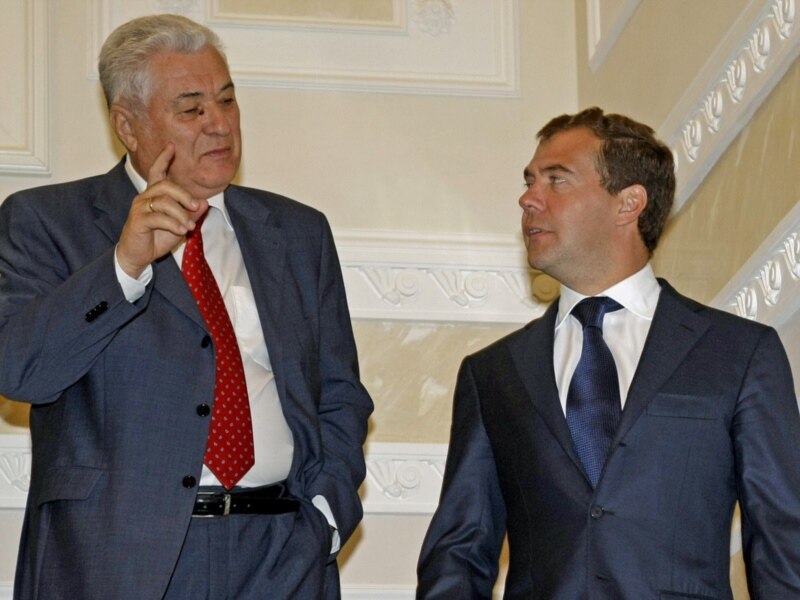
Russian President Dmitry Medvedev (right) meets with his Moldovan counterpart, Vladimir Voronin, in Sochi.

August 25, 2009
By Irina Severin
Communist Party leader and acting Moldovan President Vladimir Voronin met last week in Sochi with Russian President Dmitry Medvedev.

It was the same day that the new coalition, the Alliance for European Integration (which includes the four opposition parties that together hold a majority of seats in the new legislature) had planned to open a dialogue with the Communists, who control nearly half the seats in the legislature elected on July 29.

Just two days before leaving for Sochi, Voronin told Moldovan television, “We do not want to provoke early parliamentary elections, and we shall do everything possible in order not to step on the same rake again, as we did in the previous elections.” He hinted clearly that his Communist Party is ready to negotiate with the opposition coalition, and he complained that he had not yet received any official proposals for beginning a dialogue.

But shortly after the meeting with Medvedev was hastily announced, Voronin suddenly refused to accept an official invitation for talks that Liberal Democratic Party leader Vlad Filat, one of the key figures of the new alliance, tried to hand him at the ceremony for presenting identity cards to the new parliament deputies.

We’ll probably never know what happened between these two events to change the president’s mind so sharply. How was Voronin’s meeting with Medvedev – which was announced at the last moment without any agenda being offered – arranged? Why wasn’t anything more than a cursory announcement presented to the media?

Was it Voronin who pushed for the talks? If so, he must have had some extraordinarily compelling arguments.

At Medvedev's Insistence?

During the informal CIS summit in Moscow last month, Voronin was the only president there (not counting the leaders of the breakaway Georgian regions of Abkhazia and South Ossetia) who was not granted the honor of a face-to-face chat with Medvedev.

“We do not recognize any alliance.
We will hold talks with all the parties that
entered parliament.

It seems more likely that the Sochi meeting was held at the insistence of Medvedev, and that most likely it was a Soviet-style encounter of a low-ranking functionary being called out on the carpet by the big boss.

What was so pressing that it was necessary to drop all the normal formalities? There was no press conference following the talks, a practice that has become the norm since Medvedev took office. Journalists had to make do with the bland statement that the two men discussed “issues of economic cooperation, in particular ways of overcoming the slowdown in trade and economic relations, and regional issues, including those related to a Transdniester settlement.”

Of course, with the Moldovan government in flux and a new president expected within days, it would seem a strange time for Medvedev to organize urgent talks on ongoing issues. After Voronin left Sochi, the Russian media tended to treat the event (which was the third Moldova-Russia summit since Medvedev became president last year) like a “farewell gesture” to the Moldovan leader.

No 'Irritation'

In Moldova, the overall handling of talks has given rise to reasonable speculation about the event among journalists and analysts. One of the most insistent ideas making the rounds is that it marked the last, crucial moment when Moscow could influence the process (one way or another) of negotiating an agreement between the Communists and the new pro-European alliance.

The Kremlin took some pains to cool down such speculation. The business daily “Kommersant” quoted an anonymous administration official as saying “the parties and members of the parliamentary majority in Moldova [the Liberal Democratic Party, the Liberal Party, the Democratic Party, and the Our Moldova Alliance] do not cause any irritation in Russia.”

“They do not call into question cooperation with us as a major trading partner,” he continued. “For us, the main thing is that the programs of this force show a positive attitude toward Russia.”

The source also said that “negotiations on the allocation to Chisinau of Russia’s $500 billion loan will be pursued as soon as it becomes clear who has the authority to handle them from the Moldovan side. That is, after the election of a new president of Moldova.”

Recognize No Alliance

But maybe Voronin interpreted Medvedev’s message differently. After he returned to Chisinau, he convened a meeting of the party at which it was decided not to enter into talks with the Alliance for European Integration, but instead to try to create a left-center coalition on the basis of the Communist Party.

“We do not recognize any alliance,” Communist Deputy Mark Tkaciuc, a former adviser to Voronin, told RFE/RL’s Moldovan Service. “We will hold talks with all the parties that entered parliament.”

The Sochi meeting must have gone pretty rough to make the Communists so forgetful. In any event, it would seem the political situation in Moldova is now back to square one as parliament prepares to convene on August 28. If that is so, the likelihood of electing a president without new legislative elections is low – after all, if not one deputy was willing to cross lines and vote with the other side following the elections in April, what are the chances of several deciding to do so now?

If another stalemate emerges, how the Communists will react is unknown, with some observers even speculating the party might declare some sort of state of emergency and suspend normal political processes. With fears and rumors of this sort making the rounds, it really would have been a comfort to have some more concrete and believable accounting of what Voronin was doing in Sochi.

Irina Severin is a journalist based in Chisinau. The views expressed in this commentary are the author's own and do not necessarily reflect those of RFE/RL.

Oct 1, 2009

Russia behind No camp in Ireland: U.S. credibility used to bolster anti-Lisbon vote in Ireland

By Irina Severin 

Declan Ganley’s reappearance on the Irish political scene after few months of silence was stage managed in a strange way. He was shown at the beginning of a Deutsche Welle television interview in his office taking down a U.S. flag and stuffing it under his desk: http://www.youtube.com/watch?v=HMRP_TqBzr0&feature=player_embedded
Ganley has long been dogged by (and denied) accusations that his political movement is funded by nefarious interests in the United States.” The DW video was widely posted on blogs and viewed on YouTube, interpreted as convincing proof both of Ganley’s naivety and of secret U.S. backing for his drive to have Ireland reject the EU’s Lisbon treaty in a referendum on October 2.

But is Ganley naive?

Just days before Ireland’s second referendum on the Lisbon treaty, Ganley joined the “No to Lisbon” camp again — exactly as he did in 2008, when his late involvement shifted the balance in favor of a “no” vote. His success was based on massive funding, which enabled him to overwhelm other political parties or lobbying groups. Ganley’s secretiveness about the sources of his funding fed rumors of massive external involvement in campaign. Ganley denies the rumors, but has not detailed where the money came from.

The theory that that Americans are unhappy with “Europe’s growing clout in the world” and so funded Ganley’s Libertas has gained traction despite constant complaints from Washington about the EU’s fecklessness on energy security issues. The fact that Ganley owns a business with ties to the U.S. military was seen as further evidence. Ganley himself has denied such ties with the United States, but he is careful to always do so in ways that only inflame the rumors.

Observers in Eastern Europe tend to support another theory – that Russia stands behind Ganley’s efforts to undermine the EU. Ganley, after all, got his first real business success in the late 1980s, when he moved to the Soviet Union and hooked up with a business exporting Soviet aluminum. Such a business breakthrough in the Soviet Union by a foreigner in his 20s is sufficient to raise suspicions of the involvement of Russia’s secret services. He used the money he made from this venture to set up his own businesses in the West.

Ganley’s Libertas Institute Ltd. officially appeared in December 2007, just a month after then-Russian President Vladimir Putin announced the creation of a Russian-government-funded Institute for Freedom and Democracy in Europe during an EU-Russia summit. This institute, Putin said, would be based in the European Union and was intended to attract the involvement of politicians, businesspeople, experts, and NGOs. It would offer grants and was declared by Putin’s aid as a “symmetrical response” for Western funding for pro-democracy NGOs in Russia.

The initiative was immediately seen as a new version of the “pro-peace organizations” that operated as Soviet fronts in the West during the Cold War, promoting the Kremlin’s foreign-policy goals. When Putin made his announcement, EU Commission President Jose Manuel Barroso merely commented that the EU and Moscow have quite different views on democracy. But the fact is that Putin’s Kremlin views Western liberal democracy as an ideology that is hostile to Russia, bent on destabilizing the Russian state and weakening its political system. So what are we to make of Moscow’s “symmetrical response”?

Ganley stepped-up his “No to Lisbon” campaign during this year’s European Parliament elections. He transformed Libertas into a pan-European party that attempted to unite the anti-Brussels vote and harness resentment over the Lisbon treaty. Libertas bankrolled right-wing fringe parties around Europe, but it was not able to win any seats. Ganley himself was denied a seat by Irish voters and vowed to leave politics in June.

Ganley’s reappearance this month and his antics with the U.S. flag brought to mind the anti-Communist youth protests in Moldova in April – the so-called Twitter revolution. At the time, an article in France’s “Le Monde” newspaper headlined “Russia Is Trying To Push Moldova Away From The EU” said that Russian Ambassador to the EU Vladimir Chizhov, just a couple of hours after the riots – which were sparked by unidentified provocateurs — phoned ‘a senior official in Europe’ to say that he had been informed by Moscow that ‘in Chisinau a coup d’etat is under way, orchestrated by Romania’ and that the proof was a Romanian flag flying on the presidential palace.”

After Czech Prime Minister Mirek Topolanek visited the country in the wake of the violence he mentioned Moldova – together with Ukraine and Georgia — as an example of Russian attempt to regain its influence in the region and called on the Czech parliament to ratify the Lisbon treaty.

After the Communist Party was defeated in Moldova’s July parliamentary elections, Kremlin-connected political consultant Gleb Pavlovsky wrote in an article called “An Elegy In Memory Of President Voronin”: “Of course, Russia could provoke another revolution or two in Moldova. And, it stands to reason, Russia could then crush them. But what is the point of doing either? It is enough simply not to leave until the goal of deterrence becomes clear.”

What does this have to do with the Lisbon treaty? If the EU is unable to get the treaty endorsed, it will be weakened. Not only will enlargement be crippled, but the EU’s soft-power attraction as a successful political model will be weakened as well. And that would strengthen Russia’s position in its so-called near abroad.

Russia has already managed to fragment the EU through its energy politics and its aggressive policy of pursuing bilateral relations with EU members. These policies bring EU countries into competition with one another and form obstacles to the emergence of an EU consensus on key matters. If Ireland rejects the Lisbon treaty a second time, the status quo will be consolidated and, quite possibly, irreversible.

Political expert Vladimir Batyuk, of Russia’s Institute of the United States and Canada, laid out Moscow’s strategy in an article called “Russia: A Chance To Win.” “In our view, the global economic crisis not only creates problems, but also opens up new prospects for our country to strengthen its international position,” he writes. “Western post-Cold War triumphalism dooms Russia to the status of an ‘eternal loser.’ Euro-Atlantic structures like NATO and the EU only perpetuate this status. Hence, Moscow’s interest in weakening the latter: this is a goal of President Dmitry Medvedev’s initiative on a new treaty on European security – the so-called pan-European treaty.”

Seen in this context, Ganley’s shenanigans with the U.S. flag look like an inventive attempt to direct responsibility for anti-Lisbon treaty movement toward the United States and to provoke tensions between Washington and its European allies. This flag game, just like the one played out in Chisinau in the spring, seems to be a clever way of using U.S. credibility to bolster the anti-Lisbon vote in Ireland. But if Ireland rejects the treaty, clearly it is the United States, the EU, and Ireland that loses. But those in the Kremlin will definitely be smiling.