Apr 27, 2010
Putin and Medvedev - A Purely Platonic Power Couple - NYTimes.com
By CLIFFORD J. LEVY Published: April 26, 2010During a visit to Italy, Mr. Putin mocked a question from an Italian reporter who wanted him to explain the secrets to success in a “political marriage.” Mr. Putin has led Russia jointly with Mr. Medvedev for the past two years, after term limits prevented Mr. Putin from running for a third consecutive term as president.
Mr. Putin said the question had been phrased “in a very literary way.”
“Mr. Medvedev and I are people of a traditional orientation,” Mr. Putin said. “I can tell you this with complete certainty. As for marital unions, you have exaggerated a bit. But we are friends, friends for many years, I have already said this. And the way that we have arranged our work today — it seems to me, we can be proud of this.”
Mr. Putin was speaking at a news conference with Prime Minister Silvio Berlusconi of Italy, with whom he has long had a close (working) relationship.
When it was his turn to speak, Mr. Berlusconi added his own quip.
“I have experience in many areas: in urban planning, in publishing, in sports, in television, in public works,” Mr. Berlusconi said. “But I have not done so well with regards to marriage, so I will not begin to give advice.”
Mr. Berlusconi has had a stormy personal life, and he and his second wife are divorcing.
Mr. Medvedev was not part of the visit. But in an interview with Danish television that was released by the Kremlin on Monday, Mr. Medvedev acknowledged that he and Mr. Putin did not always agree on everything.
“Despite the similarities in our circumstances, we have had different experiences, and we may have different views on some of the nuances as to how our political system should develop,” Mr. Medvedev said.
Max Kolonko: The Mystery of Poland's Presidential Plane Crash Deepens
Max Kolonko
This situation additionally complicates the fact that the Polish president was headed to Russia to commemorate a mass murder of Polish officers during World War II by the Soviets in Katyn, "a cursed place" as the former President of Poland Aleksander Kwasniewski has described it. Some even compare the Polish presidential jet crash, in which Poland lost its President and dozens of political, military and religious leaders, to Katyn No 2.
If the cause of the crash is determined to be a flight controller's mistake or a malfunction of the navigation equipment at the Russian airport, it could harm Polish-Russian relations, which for years have been far from satisfactory, the source says.
Questions
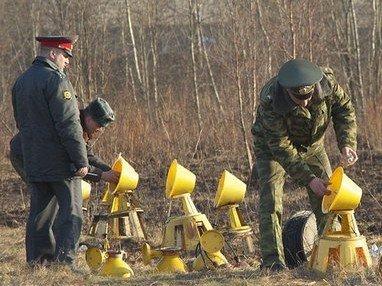
A picture of Russian airport personnel changing light bulbs in the approach lights to Smolensk airport under the supervision of a uniformed Russian military officer has been circulated in the Polish media. This prompted the Polish prosecutor in charge of the investigation to ask his Russian counterpart for an explanation.
"The question should be: was it something that was planned earlier or was it a decision that was taken in the aftermath of the crash," says G
reg Phillips, a former NTSB crash investigator.
Four days before the crash, jets of Russian Prime Minister Vladimir Putin and Polish Prime Minister Donald Tusk safely landed on the same tarmac in Smolensk.
Ukraine parliament ratifies Russian naval base deal
|
| English.news.cn 2010-04-27 16:00:24 |
| Deputies scuffle during a session in the chamber of the Ukrainian parliament in Kiev, capital of Ukraine, April 27, 2010. Fighting broke out and smoke bombs were released Tuesday in the Ukrainian parliament over an agreement with Russia to extend the stay of Russia's Black Sea Fleet in Ukraine's Crimea. Meanwhile, thousands of opposition demonstrators rallied outside the parliament to protest the extension to the Russian navy's stay.(Xinhua/Reuters Photo) |
KIEV, April 27 (Xinhua) -- The Ukrainian parliament ratified on Tuesday an agreement to prolong the stay of the Russian navy in Ukraine's port of Sevastopol until 2042.
Apr 23, 2010
Putin wins again - NYPOST.com
Rebuilding imperial Russia
Last Updated: 7:41 AM, April 17, 2010
Posted: 12:55 AM, April 16, 2010
Jeez, this guy is good.
A few years back, I wrote that Russia's Prime Minister Vladimir Putin was the most impressive major leader on today's world stage. Since then, he's gotten better.
Back then, he was eating President George W. Bush for breakfast. Now he's snacking on President Obama as sushi -- eating him raw, in happy little bites.
Putin's ruthless, unforgiving and murderous. He also has a clear vision of what he wants, the strength of will to get it -- and a stunning ability to spot the weaknesses in his foreign counterparts.
Putin's the Evil Empire's belated answer to President Ronald Reagan. Where the Gipper focused uncompromisingly on bringing down the Soviet imperium, Putin focuses uncompromisingly on restoring imperial Russia.
ReutersFostering trouble in our backyard: Putin (l.) being honored by Venezuelan thug Hugo Chavez, who's buying billions in arms from Russia.
Reuters
Fostering trouble in our backyard: Putin (l.) being honored by Venezuelan thug Hugo Chavez, who's buying billions in arms from Russia.
Apr 21, 2010
EUobserver / European reporters' unions want EU to back journalism as ‘public good'
LEIGH PHILLIPS
If governments can fund theatre and art galleries to protect cultural pluralism, they say, they can fund journalism to protect information pluralism as well.
"A toxic mix of editorial cuts, precarious working conditions and unethical journalism has created a spiral of decline for media and democracy in Europe," said Arne König, the organisation's president.
Specifically, the unions plan to lobby the European Commission and MEPs to push EU member states "to open up national debates on strengthening journalism as a public good."
The unions' main worry is the collapse of how to pay for journalism when advertisers are deserting the sector.
The multiple closures of newspapers throughout Europe and slashing of the number of staff in newsrooms means that journalistic standards are rapidly declining, and with them, the checks and balances journalism provides to democratic societies.
In particular, say the unions, publishers and broadcasters have targeted editing, investigative and specialist news reporting.
Apr 19, 2010
Marjorie Castle - After plane crash, Poland is at a political crossroads
Rarely is personal tragedy so intertwined with the political. For Poland, the crash in Smolensk, Russia, last weekend of the Tu-154 airliner carrying the country's president, first lady and dozens of other officials is a history-changing event. It is also a personal tragedy of extraordinary proportions for former prime minister Jaroslaw Kaczynski, who lost his twin brother -- his constant collaborator and political partner -- President Lech Kaczynski. This disaster's long-term impact on the Polish right -- on its worldview, its relations with domestic opponents and its stance toward Russia -- can be shaped by the bereaved twin, if he so chooses...
Apr 18, 2010
John Rentoul: Clegg: A triumph of anti-politics - John Rentoul, Commentators - The Independent
Apr 11, 2010
Top Polish political, military killed in jet crash
VICTORIA BURAVCHENKO and MONIKA SCISLOWSKA | 04/10/10 11:59 PM
Poles wept before their televisions, lowered flags to half-staff and taped black ribbons in their windows after hearing that President Lech Kaczynski and the upper echelons of the establishment lay dead in woods a short drive from the site of the Katyn forest massacre, where 22,000 Polish officers were killed by Soviet secret police in one of Poland's greatest national traumas.
Thousands of people, many in tears, placed candles and flowers at the presidential palace in central Warsaw. Many called the crash Poland's worst disaster since World War II.
Polish president's body arrives in Warsaw - CNN.com
Polish president's body arrives in Warsaw
- Poles observe two minutes of silence to honor late president Lech Kaczynski
- Kaczynski died with 95 others in a plane crash in Russia on Saturday
- Kaczynski's body returned to Warsaw from Smolensk on Sunday
- Cause of crash unknown; plane appeared to attempt landing in heavy fog
A military guard of honor unloaded a casket containing the body and draped in a Polish flag as dignitaries including Kaczynski's twin brother Jaroslaw, looked on. Family members and mourners took turns to kneel by the casket, apparently in prayer.
Apr 10, 2010
Polish President Dead: Lech Kaczynski Dies In Russia Plane Crash, 132 Dead
The Army chief of staff, Gen. Franciszek Gagor, National Bank President Slawomir Skrzypek and Deputy Foreign Minister Andrzej Kremer were also on board, the Polish foreign ministry said.
Russia's Emergency Ministry said there were 96 dead, 88 part of a Polish state delegation. Poland's Foreign Ministry spokesman, Piotr Paszkowski, said there were 89 people on the passenger list but one person had not shown up.
Apr 6, 2010
The Oligarch to the dying press : “Nasdarovie!” | Monday Note
The Oligarch to the dying press : “Nasdarovie!”
It is not a coincidence, it is an emerging pattern. A terrible one. In which huge amounts of money of questionable origin will take over dying media.
These two papers are by no means comparable. The Independent remains a remarkable newspaper. France-Soir’s luster is long gone. A sorry procession of owners and editors, all promising the miraculous “nouvelle formule” (French term for redesign), were unable to revive the once popular evening daily. Each relaunch turned to be a new set of hospital robes for the terminally ill patient. Except this time: thanks to cash from Sergey Pugachyov – in fact his 25 years-old son Alexander – the robes are silk-made, the dressing gown is pashmina and everyone seems to want a piece it.
Apr 4, 2010
Jeff Schneider: Will the Next Act of Terrorism Be Domestic?
With the passing of health care reform in the US House, the rhetoric emerging from the American political right has reached new heights. From the yelling of Minority Leader "Hell No You Can't" Boehner in the House to the homophobic and racial slurs hurled by protesters outside the capital building, one thing has become even more clear: as the more mainstream conservative movement becomes more frustratedly vocal, the likelihood of domestic terrorism has unintentionally risen, and has done so exponentially.
Why a Hung Parliament in the U.K. Might Not Be So Bad
A hung parliament is a situationwhere no single political party has a majority of members of Parliament (MPs) in the House of Commons. If this happens, two or more parties may decide that they have enough in common to form a coalition government. Alternatively, another general election may be held in the hope that it delivers a more decisive result. While common in multi-party democracies like Italy and Israel, minority governments are exceedingly rare in the U.K., having occurred only four times since 1900.
Rethink Moldova
BY STEFAN FUELE AND PHILIPPE LE HOUEROU
23.03.2010 @ 15:00 CET
EUOBSERVER / COMMENT - With an average yearly income of only €1,100, Moldovans have seen their country steadily grow in the past decade only to run into the headwinds of the global economic crisis.
The crisis has taken a toll on many countries in Europe but Moldova has suffered more than most. The country's output, which grew at 6 percent between 2004 and 2008, shrank by an estimated 6.5 percent last year. The country's poverty fight stalled and foreign investment was at risk of being reversed, while a lengthy electoral process and difficult political transition left the public finances in crisis and delayed the necessary reforms.
Chisinau - The average yearly income for Moldovans is €1,100 (Photo: Ministry of Culture and Tourism
Today, though, Moldova is coming back thanks to an ambitious reform programme. During the past eight months, a new government in Chisinau has moved decisively to tackle its political and economic legacies and lay the foundation for a more competitive economy and more transparent state. The country is also firmly anchored in the EU's Neighbourhood Policy and its regional platform, the Eastern Partnership.
The Moldova Partnership Forum, jointly hosted by the European Commission and World Bank, on 24 March 2010 in Brussels, aims to coordinate international assistance in support of Moldova's reform efforts.
Since October 2009, Moldova's economic reforms have been anchored on an economic stabilization and recovery programme. This programme has included difficult spending cuts and increased tariffs (including for energy and heating) but also significant increases in targeted social assistance to soften the effect on the poor, and efforts to improve the efficiency and quality of public spending. These fiscal measures have been flanked with an effort to deregulate and de-monopolize the economy and create new jobs.
Moldova has made further progress in reforming governance. The public administration is undergoing a review to reduce duplication of functions and lay the basis for the creation of a professional civil service. Public financial management is being upgraded and key elements of the system, including public procurement and internal and external audit are being reformed in line with European standards.
Moldova's crisis was precipitated by a difficult domestic political situation and the onset of the global economic and financial crisis. However, as in many other countries in the region, Moldova's vulnerability to external shocks was made worse by an economic growth model heavily reliant on remittance-financed domestic consumption.
Beyond managing the current crisis, the challenge for Moldova's leadership is to develop a new strategy of sustainable and more balanced economic growth. To do this, the government, supported by a multi-party coalition in parliament, has chosen integration and harmonization with the EU as the anchors for its strategy. The EU-Moldova Action Plan and Partnership and Cooperation Agreement (PCA), the Eastern Partnership and, when in place, the EU-Moldova Association Agreement, will help to guide these integration and harmonization efforts.
Moldova's leaders know that fulfilling the commitments under these programmes, e.g. reforming the justice sector, liberalizing the economy, fighting corruption, does not offer a short-cut to prosperity and they have demonstrated that through their early commitment to decisive reform actions. They have adeptly used the moment of crisis to launch a deep social, economic and governance reform process.
For their part, Moldova's international partners are supporting these efforts. The Moldova Partnership Forum taking place later this week in Brussels will ensure that the financial assistance available from International Financial Institutions as well as Moldova's multilateral and bilateral partners will be aligned with the government's reform programme. New donors such as China and Russia have also been invited.
Such broad support should be a reassurance and an incentive to deliver. A sustained reform effort will allow Moldova to steadily close the gap between the standard of living of its citizens and those of its European neighbours. The authorities in Chisinau need international support to move ahead with their ambitious reform plans.
The writers are, respectively, EU Commissioner for Enlargement and European Neighbourhood Policy and World Bank Vice-President for Europe and Central Asia.
Apr 1, 2010
Does Tea Party Obscure a New 'Silent Majority'? - AOL News
Does Tea Party Obscure a New 'Silent Majority'?
Andrea StoneSenior Washington Correspondent
These are not idle questions for President Barack Obama, who has seen little bounce from his party's victory in passing health care reform legislation.
"The good news for Democrats, after health care passed, was that Democratic intensity levels went up," party strategist James Carville told reporters Wednesday. The bad news, he said, was that they don't nearly approach the enthusiasm levels among Republicans riled up and angry over what they see as deficit-ridden big government. If that continues until November, he said, "that doesn't bode well for Democrats" and their current edge in Congress.
Tea party protests have dominated cable TV since last summer's raucous town hall meetings on health care. Hundreds stood outside the Capitol last week to protest the legislation in the final hours before its passage.
Only a few dozen counterprotesters showed up to challenge them. Ryan Rutledge, 20, a member of College Democrats at the University of Wisconsin at Stevens Point, was among them. As he and other students chanted, "We've got the votes," they were drowned out by tea partyers singing, "Nah nah nah nah, hey hey hey, goodbye."
"People need to be more active" in support of Obama's policies, Rutledge said. Why weren't more supporters out carrying "For Health Care Reform" signs? "Most Democrats have jobs. These people are mostly retired and already have health insurance," he said, motioning to the crowd that also included unemployed demonstrators.
Tea party activists have called their gatherings conservative versions of Woodstock, but that analogy cuts two ways. While a recent Rasmussen poll revealed 53 percent approval for tea party positions, another by Bloomberg showed that just 26 percent identified themselves with those views -- however outspoken about them they may be.
And that, say some analysts, makes the tea party like the 1960s anti-war movement.
Both were "very intense, very vocal, very loud," Charles Franklin, a political polling expert at the University of Wisconsin-Madison, told AOL News. "You could plausibly make the parallel claim that it's the right that is in the minority [now] but is visible and loud and frankly driving the conversation, the coverage, in the same way that the anti-war protesters did."
President Richard Nixon countered the left-leaning protesters by coining the term "silent majority" to describe those Americans who supported his policy in Vietnam in a November 1969 speech. Nixon said he would not be dictated by a "minority" of anti-war protesters "mounting demonstrations in the street."
The Republican president would later win a landslide victory over George McGovern in 1972, discrediting the Democrat's anti-war platform by winning 49 of 50 states for re-election.
"Nixon was right -- there was a silent majority and ultimately those voices were heard," Darrell West, vice president of governance studies at the Brookings Institution, told AOL News. "The lesson to be learned is that the noisiest people aren't always the most numerous. They attract a lot of media attention, but they may not be representative of the public at large."
At a time when President Obama's job approval rating is split evenly among supporters and detractors, Democrats may take solace in the lessons of history. True, recent elections inMassachusetts and earlier in Virginia and New Jersey were big blows. But if there is a left-leaning "silent majority" waiting in the wings, the events of the next few months could help them find their voice.
"As the right becomes radicalized, they risk alienating the center," Democratic strategist Paul Begala told AOL News. "The fringe anti-war extremists in the '60s discredited the left and legitimate liberalization for a generation."
Whether extremists on the right will do the same to the tea party remains to be seen. More relevant for congressional elections this fall, Begala said, "Is there an Obama movement or was there just an Obama moment?"
Democrats like Carville acknowledge that the thrill of those "Yes We Can" days is gone. Analysts say that's to be expected.
"When you've won, you then sit back and wait for your guys to govern," said Cal Jillson, a Southern Methodist University political scientist.
"It's easier to generate intensity in opposition than in support," West said. "Democratic activists have been complacent. ... They should realize that if they don't express their views, their voices won't be heard" in November.
Franklin agreed: "A silent majority that stays home and sits on its hands can help convert a loud minority into a winning voting coalition."
University of Virginia political scientist Larry Sabato said he isn't sure there is a left-leaning silent majority, but he is convinced that most of the 53 percent of voters who chose Obama in 2008 are still with him politically. He also said that the "vast majority" of opposition to Democratic policies comes from the minority 46 percent who voted for Republican John McCain.
"I don't think Obama's coalition is silent at all," he said, noting that many on the left grumbled loudly that he caved to moderates by dropping a public health insurance option and on Wednesday were none too pleased over his expansion of offshore oil drilling. "They were as loud and assertive in '08 as the tea party crowd is today. By 2012, they'll be back in the public forum."
Republican message guru Frank Luntz isn't so sure. "There was a vocal majority that had had enough of [George W.] Bush and [Dick] Cheney and Republicans," he told AOL News. "But now they see this change and they don't like what they see. This is not change they can believe in. It's too radical for them, too government-centered."
Luntz said there are many who want Obama to do well, though. "There is a silent majority that still hopes he succeeds. They connect America's success with his," he said. "They just wish he didn't support what he supports."