Aug 21, 2010
Rosatom Calls Bushehr 'International Project' | Business | The Moscow Times
Aug 18, 2010
Murdoch, Saudi prince team up to launch ‘Arabic Fox News’ | Raw Story
Murdoch, Saudi prince team up to launch ‘Arabic Fox News’
Aug 15, 2010
Big Peace | Big Peace
Un-Reset Russia Enables Iran to ‘Go Nuclear’
For starters, this Russian action offers the latest and most compelling evidence that there has been no real, two-way “reset” of US-Russian relations. Taken together with Russia’s providing advanced anti-aircraft systems, refined petroleum and political protection to Tehran, even the immediate rationale for U.S. appeasement of Moscow – i.e., the Kremlin’s help with the Iranian nuclear program – has not panned out.
In fact, all we have to show for this unilateral reset is systematic accommodation by the United States and business-as-usual by the Kremlin.
Jul 30, 2010
Medvedev Signs Bill Widening FSB Powers | The Moscow Times
Medvedev Signs Bill Widening FSB Powers
President Dmitry Medvedev, right, entering a hall to attend a special conference in the Kremlin earlier this week. Medvedev signed into law a measure that allows the FSB to issue warnings to people about their potential crimes.
The law, which permits the FSB to issue warnings to people it deems are preparing to commit crimes, has been criticized by the opposition and human rights activists.
Medvedev took credit for the bill when asked about it at a news conference earlier this month, saying "every country has a right to improve its legislation, including that related to the special services."
BP’s Future May Be Decided in Russia | Opinion | The Moscow Times
BP’s Future May Be Decided in Russia
The U.S. House of Representatives’ National Resource Committee is currently wasting its time pushing an amendment to effectively bar BP from obtaining future drilling permits. You don’t need a law to do this. BP will never obtain new permits in the United States. It would be like trying to sell Bermuda shorts to an Eskimo.
Op-ed: The Kremlin's New Policy in Its Near Abroad
The Kremlin's New Policy in Its Near Abroad
by Anders Aslund, Peterson Institute for International Economics
Op-ed in the Moscow Times
July 28, 2010
© Moscow Times
In August 2008, Russia's relations with its post-Soviet neighbors reached an all-time low in the aftermath of the Russia-Georgia war. Not one single country in the region recognized the independence of Abkhazia and South Ossetia because it would have endangered its own claim to territorial integrity.
The Commonwealth of Independent States (CIS) achieved its height of ridicule at its annual summit in Chisinau, Moldova, on October 9. The headline in Nezavisimaya Gazeta said it all: "Summit in 30 Minutes. The CIS Leaders Had Nothing to Tell One Another." Of the 11 CIS members, only 6 arrived—Russia, Belarus, Ukraine, Armenia, Azerbaijan, and Kyrgyzstan, while Moldova temporarily had no president. Only one of five Central Asian presidents bothered to come. Needless to say, nothing was accomplished. To aggravate things further, President Dmitry Medvedev refused to meet Ukrainian President Viktor Yushchenko or Belarusian President Alexander Lukashenko. Everybody left quickly after the half-hour meeting. The scheduled gala dinner was canceled. The CIS is both Russia's baby and failure.
Jul 24, 2010
Federal Probe Extends to Two BP Managers - WSJ.com
- JULY 22, 2010
BP Managers Named in Disaster Probe
The Two Men Were Aboard Rig for the Oil Giant; Documents Show Key Safety Switch on Deepwater Horizon Didn't Work
By BEN CASSELMAN And RUSSELL GOLD
Concerns about a tropical storm disrupted efforts Thursday to permanently seal the BP well in the Gulf of Mexico. Development Driller II and Development Driller III, shown above, are drilling the relief wells.
KENNER, La.—Two managers from BP PLC have been named as subjects of a federal investigation into the explosion and sinking of the Deepwater Horizon oil rig in the Gulf of Mexico.
The two men are the first individuals from BP to be named "parties in interest" in the case, indicating that they are potential targets of the probe.
Editors' Deep Dive: BP Plots Survival Strategy
-
THE ECONOMIST
After the Leak
-
Associated Press Newswires
Off Death Watch
-
The Guardian
BP Chief Fights Back
Both were aboard the rig representing BP, which owned the well being drilled, when the well blew out April 20, killing 11 and unleashing the worst offshore oil spill in U.S. history.
Investigators on Thursday said they had named as parties Robert Kaluza, a BP employee overseeing operations on the rig, and Patrick O'Bryan, BP's vice president in charge of drilling. Neither could be reached for comment Thursday evening. A lawyer for Mr. Kaluza didn't immediately respond to messages. BP declined to comment.
Mr. Kaluza has twice been called to testify in front of the investigative board holding hearings in this city just outside New Orleans. He declined, citing his rights under the Fifth Amendment of the U.S. Constitution.
Five employees of Transocean Ltd., which owned and operated the oil rig, have previously been named as parties in the investigation; this gives the employees additional protections, such as access to evidence and the right to question witnesses.
Investigators' move to name the BP employees comes after a week of testimony in which investigators repeatedly questioned the company's decisions aboard the rig and suggests investigators believe those decisions could have contributed to the disaster.
BP and Transocean had already been named as subjects of the probe, which is being conducted by the U.S. Coast Guard and by the Bureau of Ocean Energy Management, Regulation and Enforcement. There are now 16 subjects of the probe, including individuals and contractors.
Meanwhile, internal documents reviewed by The Wall Street Journal show engineers who pulled some of the Deepwater Horizon's equipment from the seabed two weeks after the rig exploded found that a crucial safety switch wasn't functional.
The safety switch addressed in the documents, known as a "deadman switch," should have activated once the floating rig erupted into flames and lost communication with well-control equipment a mile below the surface. The switch should have triggered the blowout preventer, a 450-ton set of valves designed to shut down the well.
But a test of the blowout preventer's control system found that the deadman switch was inoperable, according to a May report by Cameron International Corp., which made the equipment. Cameron employees attempted to activate the switch, but nothing happened.
A second control system had a dead battery, congressional investigators have said, though Transocean disputes that.
The Cameron report, which was ordered by Transocean, also noted that the deadman switch was rebuilt, most likely aboard the rig, in February by an "unknown person."
A Cameron spokesman declined to comment. A Transocean spokesman said that testing after the blowout was "inconclusive" and that there was no reason to believe the deadman switch "wasn't fully functional."
The report, which hasn't previously been made public, provides a new clue into why the blowout preventer didn't operate as expected and seal off the raging well—one of the chief unanswered questions in the Deepwater Horizon disaster. While a working switch wouldn't have prevented the uncontrolled blowout on April 20, it could have cut off the fuel that fed the inferno for 36 hours until the rig sank.
During the hearings, federal investigators have had tough questions for Transocean, probing the driller's maintenance of the blowout preventer, safety systems and other equipment aboard the rig.
According to testimony at the hearings, the Deepwater Horizon experienced a series of power losses, computer crashes and other issues in the months before the explosion, and hundreds of items were overdue for maintenance. But in a March 29 email, a BP manager praised workers on the rig for completing 63 of 70 maintenance items. It wasn't immediately clear whether the email referred to the same maintenance issues.
A survey of the oil rig's workers by Lloyd's Register Group, which was done last spring at Transocean's request, found that they were concerned about safety aboard the rig. Less than half felt they could report unsafe conditions without reprisal, according to the survey, which was earlier reported by the New York Times.
In hearings Thursday, Natalie Roshto said her husband, Shane, who died on the rig, was particularly worried. "From day one he deemed this hole a well from hell," said Ms. Roshto, who is suing Transocean for the wrongful death of her husband. "He said Mother Nature just doesn't want to be drilled here."
Write to Ben Casselman at ben.casselman@wsj.com and Russell Gold at russell.gold@wsj.com
Jul 18, 2010
FOXNews.com - Putin Boasts Russia's New Fighter Jet Better Than U.S. Planes
Putin Boasts Russia's New Fighter Jet Better Than U.S. Planes
Jul 12, 2010
Butyrka Prison Now Helping to Spread Russian Orthodoxy
MONDAY, JULY 12, 2010
Why The Russia Spy Story Really Matters
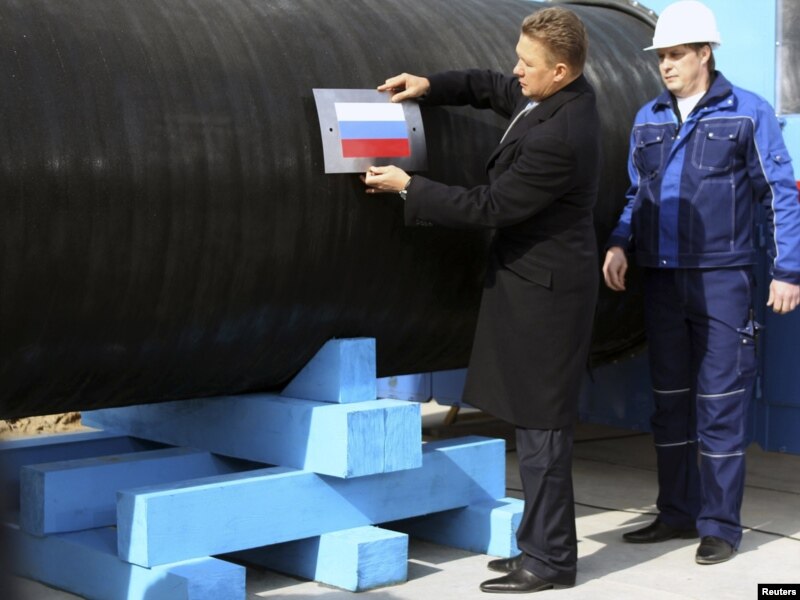
national flag to a pipe of the Nord Stream pipeline near the town
of Vyborg in April. The pipeline should bring Russian gas directly
to Germany, bypassing transit countries.
Russian spy dead; tipped authorities about spy ring - wtop.com
Russian spy dead; tipped authorities about spy ring
July 9, 2010 - 3:32pmWASHINGTON - Sergei Tretyakov, 54, one of the world's most famous spies of all time, is dead, WTOP has learned.
Still shaken and at times emotional, Sergei Tretyakov's widow Helen reluctantly confirmed his death today to prevent Russian Intelligence gloating.
"I'm doing this because I don't want Sergei's former colleagues to have the luxury of flattering themselves that they punished Sergei."
"The autopsy showed nothing suspicious. It was a tragic, sudden death of natural causes," she says.
Helen Tretyakov said, "Sergei was never afraid of being chased or killed or murdered by his former colleagues -they wouldn't dare."
WTOP recently featured Tretyakov, who defected to the U.S. a decade ago, in the series "Escaping from the Iron Curtain."
The Tretyakov's defected to the United States in October of 2000 during his five-year deployment in Russia's New York mission, in charge of Russian spy activities in the U.S. and the United Nations.
Jul 11, 2010
OBSERVATOR.md: ВЗГЛЯД / Новые подозрения
ВЗГЛЯД / Новые подозрения
| 7 июля 2010, 19:28 Фото: rmf24.pl Текст: Николай Анищенко |
Jul 4, 2010
Opec Production Cut Fails to Inspire Oil Market; Oil Drops to Four-year Low | Financial News
Opec Production Cut Fails to Inspire Oil Market; Oil Drops to Four-year Low
By Jason Simpkins
Associate Editor
Money Morning
Oil prices fell again yesterday (Wednesday) – dropping below for the first time in four years – as weak demand and growing inventories overshadowed a record cut in production by the Organization of Petroleum Exporting Countries (OPEC).
EUobserver / UK sets out plan to regain influence in EU
UK sets out plan to regain influence in EU
Jul 2, 2010
Actually, those Russian spies weren't useless
Posted By Steve LeVine Thursday, July 1, 2010 - 2:29 PM
Nikolai was a Russian sleeper agent, an undercover spy of a type that is in the news again, thanks to the arrest of 10 of them in the United States this week. Many people are mystified as to just what these folks were doing here, if, as appears to be in the case in their indictments, they never carried out any actual espionage.